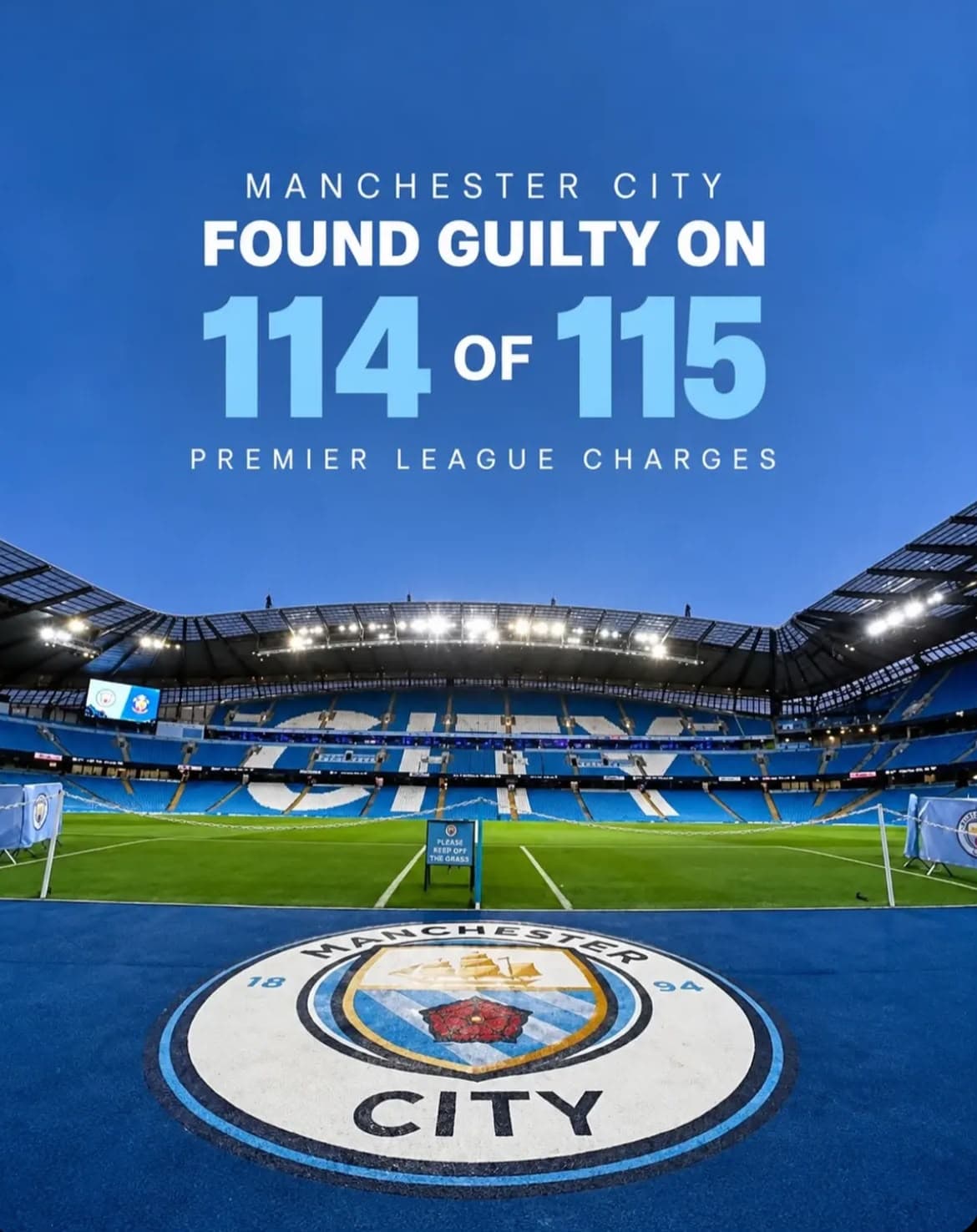
Manchester City have been found guilty of breaching Premier League financial rules over a period spanning nearly a decade, with an independent commission finding that the club used commercial agreements to disguise more than £830 million in funding.
The findings cover the 2009-10 to 2017-18 seasons and relate to more than 100 alleged individual rule breaches. The commission concluded that City used sponsorship arrangements to inflate revenues and reduce reported costs.
During City's Premier League-winning seasons in 2011-12, 2013-14 and 2017-18, the club recorded around £360 million in sponsorship fees. The commission found that only £43 million represented legitimate sponsorship payments, with the remainder coming from the club's owners and being presented as commercial income.
The report also found City guilty of all but one charge relating to cooperation with the Premier League investigation and said some club witnesses provided false evidence in important areas.
Premier League chief executive Richard Masters said the findings showed City had systematically breached league rules for nearly a decade, adding that enforcing those regulations was essential to protecting the integrity of the competition.
City to appeal
What's your hot take on this story?
Manchester City continue to deny wrongdoing and have until 2 October to submit an appeal.
The club said it was "disappointed and surprised" by the commission's findings and maintains that it has substantial evidence supporting its position. City also argues that the decision contains significant errors of law, principle and fact.
No punishment has yet been announced. The Premier League said any sanction will be determined at a separate private hearing.
Former City chairman David Bernstein has called for serious sporting consequences if the findings survive the appeal, while UK Culture, Media and Sport Secretary Lisa Nandy described the case as extremely serious.
The focus now turns to City's appeal and the separate process that will determine what sanctions the club could face if the findings are upheld.